One unique donation to the USTUR is that of a former nuclear worker who inhaled curium. His curium intake was minor in comparison to a much larger plutonium intake; however, relatively little direct human data about curium in humans is available. Curium is a minor actinide that has mostly been studied in animal models, or in terms of excretion of curium in urine after an intake. To our knowledge this is the first time that the curium biokinetic model has been combined with direct measurements of curium in human tissues.
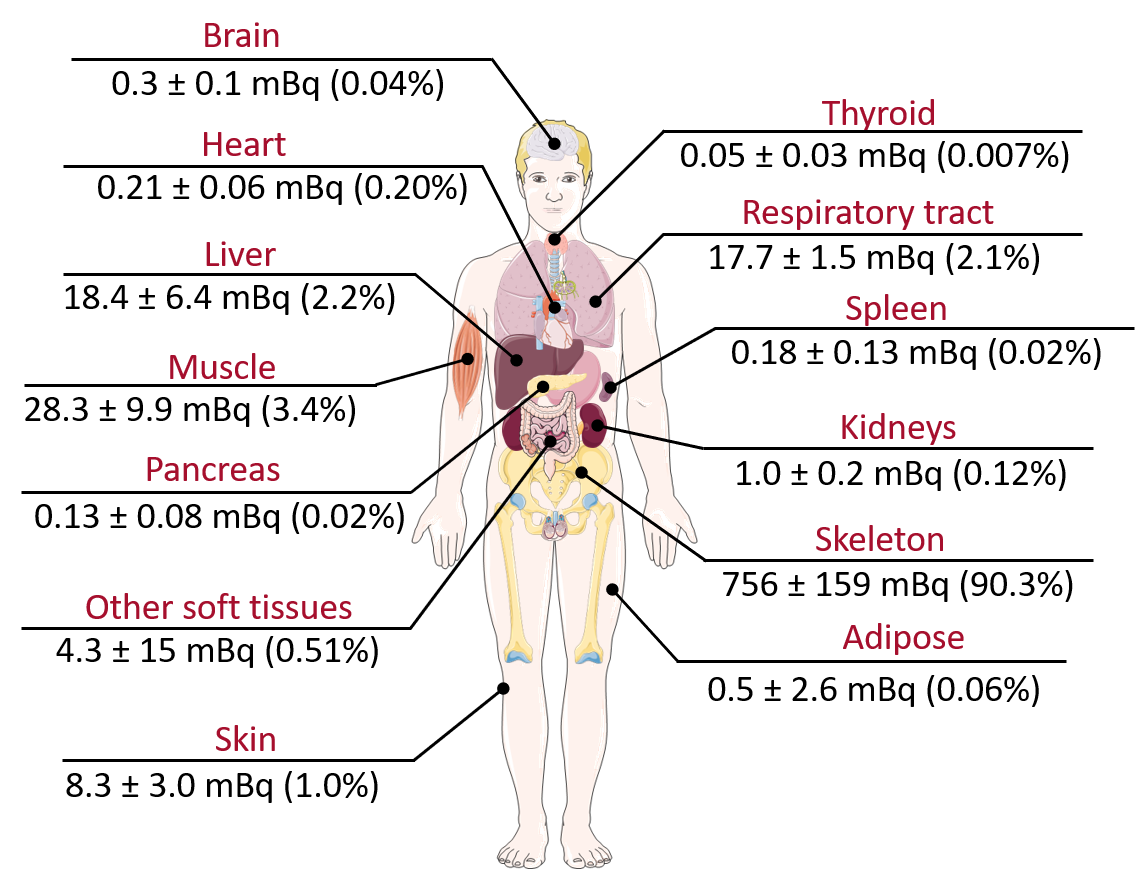
This Registrant received an acute inhalation of curium-244 when a glove box failed. The worksite analyzed one urine sample for curium, but the amount of curium-244 in the sample was below the detection limit. Over five decades later, this individual passed away and donated selected tissues to the USTUR. The USTUR carried out post-mortem measurements to determine the amount of curium in 10 bones and 18 soft tissues. The results of these analyses confirmed that an intake had occurred. The worker was estimated to have inhaled approximately 840 mBq of curium-244, most of which was in the skeleton (90%), followed by muscle tissue (3.4%) and the liver (2.2%). The mass of the skeleton, and the muscular system, is much larger than that of the liver. This makes it useful to consider the concentration of radionuclides, such as curium, in tissues rather than the total activity. The highest concentration of curium-244 was observed in the tissues of the respiratory tract (182 mBq per kg), followed by the skeleton (77 mBq per kg) and the liver (15 mBq per kg).
Sergey Tolmachev presented this research at the 2025 Radiation Research Society meeting last September. A more comprehensive overview is available in the presentation slides from this meeting, which feature plots comparing the modeled retention of curium in various organs to the corresponding measured values. The slides also include a comparison between the distribution of curium to that of americium.
Presentation slides
 In December, the USTUR mailed its 2025 Registrant newsletter to living Registrants and deceased Registrants’ next of kin. This year’s newsletter included two guest articles from the scientific director of the Million Person Study, Lawrence Dauer. The first article introduced the MPS and the second discussed an observed association between Parkinson’s disease and radiation dose. The newsletter also included the USTUR director’s annual “Direct from the Director” letter, information about a proposal to create a Radiological and Nuclear Security Leadership Academy at WSU, an update on the USTUR’s follow-up urine collection program, a summary of the MPS special session at the 2025 American Public Health Association meeting, and a brief history of the Oak Ridge Associated Universities consortium, which WSU has been asked to join.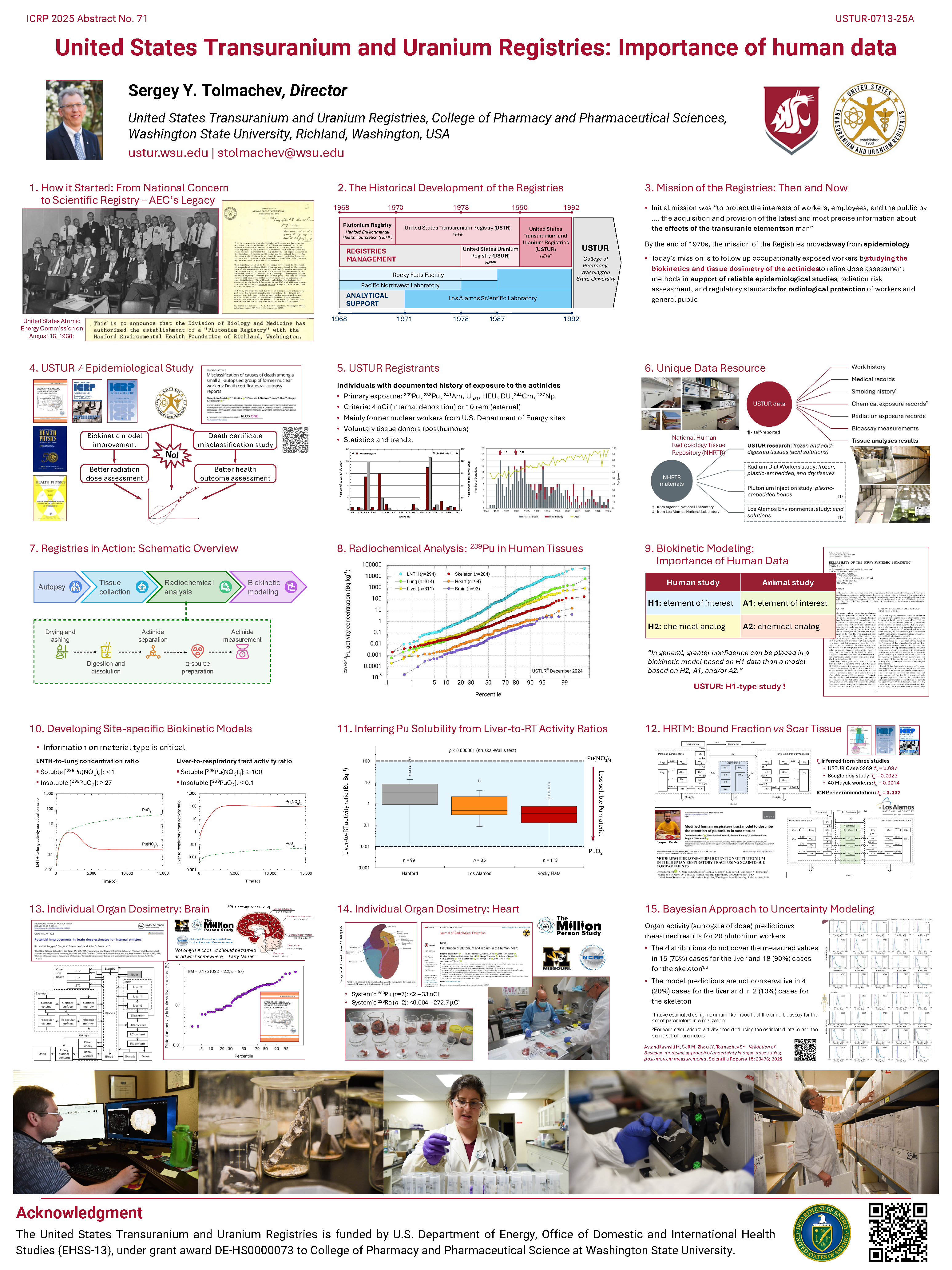

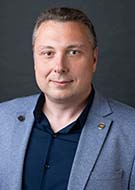 The USTUR’s Assistant Director,
 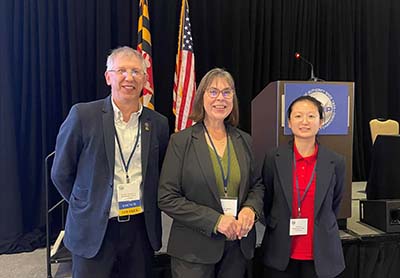 USTUR faculty recently participated in the National Council on Radiation Protection and Measurements (NCRP) Annual Meeting, where they authored three presentations that highlighted the USTUR’s role in supporting epidemiological studies by helping to improve the reliability of both dose assessment and disease outcome data. This year’s NCRP meeting focused on the work that is being conducted by the Department of Energy’s Million Person Study (MPS). The million person study is investigating a range of health effects of low-dose radiation on American workers and veterans.
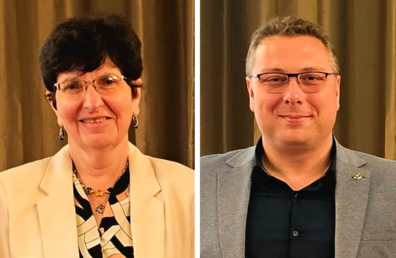 George Tabatadze and Maia Avtandilashvili recently had the honor of being invited as ICRP experts to teach an internal dosimetry course for the UAE Federal Authority for Nuclear Regulation (FANR) in Abu Dhabi, October 14-18. The week-long course was organized jointly by FANR, ICRP, and the European Radiation Dosimetry Group (EURADOS). It included lectures that covered key concepts, such as intake routes and biokinetic models, as well as afternoon sessions dedicated to hands-on exercises that allowed participants to apply the concepts learned during the lectures. It was a privilege to be part of the world-renowned group of experts that were teaching the course. The discussions were insightful, and it was truly inspiring to see the level of engagement from the audience, with complete attention and participation throughout the entire day!
 On August 15, 2024, Dr. Maia Avtandilashvili completed a years-long project to standardize all copies of exposure and bioassay records from its all of its Registrants. The USTUR houses tens of thousands of paper copies of these records, which were obtained from national laboratories and other nuclear worksites, after obtaining permission from our Registrants. Population of a database designed to both digitize and standardize this important information was initiated by Stacey McComish with entry of data from Case 0202 – a nuclear defense worker who was involved in a plutonium fire – in December 2008. Starting on her first day at the USTUR in January 2012, Dr. Avtandilashvili took the lead role in database development and population, and began to enter health physics data in earnest. A total of 191,961 records from 395 Registrants has been entered into the database.