Current Scientific Advisory Committee
SAC History
SAC Meetings
All SAC Members, past and present
|
Janet M. Benson – Scientific Member |
|
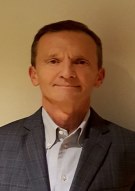
BENSON, Janet M., PhD Scientific Member 4/1/2020 – 3/31/2026 Dr. Benson’s areas of research include examining the efficacy, pharmacokinetics/toxicokinetics and safety of potential new therapeutics, including small molecules, natural products, and gene therapies. Dr. Benson also has had extensive experience in the design and conduct of inhalation studies, including toxicokinetic and mechanistic evaluations of metals, solvents, natural products, and select agents. Her laboratory has developed animal models of ocular, dermal, and pulmonary injury in which to examine the efficacy of new therapeutics. As Principal Investigator of the NHLBI Gene Therapy Resources Program, she assisted NHLBI investigators in designing IND-enabling safety and efficacy studies that are implemented at Lovelace. She has over 30 years experience in the conduct of studies under Good Laboratory Practice Guidelines for Government and Industry Sponsors. |
|
Luiz Bertelli – Scientific Member |
|
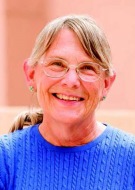
BERTELLI, Luiz, PhD Scientific Member 4/1/2018 – 3/31/2027 Luiz Bertelli has been an internal dosimetrist at Argonne National Laboratory since 2003, and he previously worked at Argonne National Laboratory. He has worked in internal dosimetry modeling and interpretation of monitoring of radiation workers for 40 years, including 18 years in Brazil where he was responsible for calculating all internal doses and evaluating initial efficacy of Prussian Blue for all age groups due to the Goiania radioactive accident. Dr. Bertelli has been a member of the International Commisssion on Radiologial Protection (ICRP) Task Group on Dose Calculations since 1995, and was a member of ICRP Committee 2 from 2013-2017. He has been a member of the National Council on Radiation Protection and Measurements (NCRP) since 2019, and has served on NCRP’s Program Area Committee 6 on Radiation Measurements and Dosimetry since 2013. He is also a faculty member with the Radiation Emergency Assistance Center / Training Site (REAC/TS) and an active collaborator with the Latin American branch of the International Atomic Energy Agency. Dr. Bertelli received his PhD in biophysics from the Federal University of Rio de Janeiro, Brazil in 1990, and was a post-doctoral fellow at the University of Utah’s Environmental Radiation Toxicology Laboratory from 1991-1995. |
|
Elizabeth D. Ellis – Ethics Representative |
|
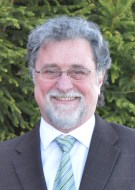
ELLIS, Elizabeth D., PhD Ethics Representative 4/1/2024 – 3/31/2027 Dr. Elizabeth “Betsy” Ellis, an Epidemiologist, provides as epidemiologic subject matter expertise and technical historical context and knowledge for ORAU’s epidemiologic and illness and injury surveillance in the areas of occupational epidemiology. From 1998 through 2015, Dr. Ellis was the Program Manager of the Department of Energy (DOE) Injury and Illnesses Surveillance Program (IISP). Illness and Injury Surveillance assessed the overall health of the current DOE workforce at 14 DOE sites and facilities. The goal was to identify groups of workers that might be at increased risk for occupation-related injury and illness. In response to indications of excess risk, program staff could assess the need for additional investigations. Surveillance was based on continuous collection, analysis, and interpretation of selected morbidity, demographic, and occupational exposure data. The program was a corporate resource providing its customers with timely health information. Program staff also provided epidemiologic and public health expertise in the evaluation of worker health concerns. She served as key study personnel on the US One Million Person Study for health effects of low-dose radiation and was involved with building the relational database containing identifying, demographic, work history, vital status and cause of death information that forms the basis for inclusion of the 360,000 DOE workers in this study. Since retiring in 2022, she continues to participate as a technical advisor to the study. From 2006-2020, Dr. Ellis served on the International Commission on Radiological Protection, Committee 2, Task Group 64 to evaluate cancer risks associated with exposure to alpha emitters. She was the Chair of the Oak Ridge Site-wide Institutional Review Board from 2001-2023 and currently serves as Vice Chair of that Board and Vice Chair of the DOE Central IRB since its inception in the 2000s to the present. |
|
Kenneth G.W. Inn – Radiochemistry Representative |
|
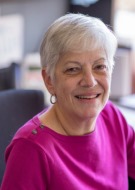
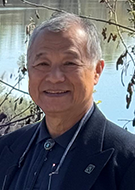
INN, Kenneth G.W., PhD Scientific Member 4/1/2025 – 3/31/2028 Dr. Kenneth G.W. Inn is an independent consultant in the determination of the concentration, distribution, speciation and measurement quality assurance/quality control of low-level actinide, fission product and activation product radionuclides in environmental and biological systems by ultra-clean radiochemistry and ultra-high sensitive and selective measurement methods. He holds a B.A. from the University of Hawaii, an M.S. from San Diego State University, and a Ph.D. from the University of Arkansas, all in in Radiochemistry. Dr. Inn has directed programs in low-level radionuclide environmental-matrix Standard Reference Materials, radionuclide speciation in soils and sediments, and emergency response [nuclear terrorism or unintentional release] and low-level radiochemistry traceabilty evaluations. He served as a Research Chemist at the National Bureau of Standards (NBS) between 1978-1988; a Scientific Assistant at NBS, the U.S. Department of Commerce, and at the National Institute of Standards and Technology (NIST) Center for Radiation Research between 1988-1991, a Staff Radiochemist at MACTEC Engineering Services between 1991-1992, a NIST Group Leader in the Office of Radiation Measurements between 1992-1994, and a Radioactivity Group Project Leader in Low-Level Radiochemistry from 1995-2013. Dr. Inn’s honors include a Silver Medal at the United States Department of Commerce, an Award of Appreciation from the 35th Annual Bioassay, Analytical, and Environmental Radiochemistry Conference, Caswell Fellow for the Council on Ionizing Radiation Measurements and Standards, W.J. Youden Award in Interlaboratory Testing from the American Statistical Association, and Lifetime Achievement Award from the 64th Annual Radiobioassay and Radiochemical Measurements Conference. Dr. Inn is a member of the American Chemical Society, the Geochemical Society, Distinguished Reviewers’ Board for the Journal of Radioanalytical and Nuclear Chemistry 19-Present, Scientific Fellow of the Institute for Nuclear Security at The University of Tennessee [20-22], and a former member of the EPA/SAB/RAC 15-21, ASTM’s environmental test method and radioactivity test method 89-12; ANSI MQA for Rad. Assay Labs & Perf. Crit. for Rad.Bioassay 89-11; MARLAP writing group; DHS/ICLN-Rad Lab Capability Workgroup 06-13; FRPCC 07-13; ISO 17025 NIST assessor 08-13; and NTNFC Reference Material Committee 08-13. Dr. Inn previously served as an advisor for the U.S. Transuranium and Uranium Registries 1989-1995. |
|
David Pawel – Scientific Member |
|
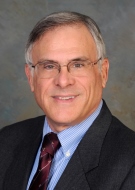
PAWEL, David, PhD Scientific Member 4/1/2023 – 3/31/2026 Dr. David J. Pawel, a Statistician and a member of the National Council on Radiation Protection and Measurements (NCRP), provides expertise on assessing health risks from environmental exposures to radiation. From 1997 to 2022 he worked at the U.S. Environmental Protection Agency (EPA), where he was largely responsible for the implementation of the Agency’s radiogenic risk models. Dr. Pawel is an author of journal articles and technical reports on EPA radiation risk models and projections for the U.S. population, such as “EPA Assessment of Risk from Radon in Homes” which describes the scientific basis and underlying methodology for current EPA estimates of risks from radon. Dr. Pawel also co-authored the technical report referred to as the “Blue Book”, which describes the radiation risk models that will be applied to update EPA’s cancer risk coefficients for environmental exposure to radionuclides. From 1992-1994, he was a research scientist at the Radiation Effects Research Foundation (RERF) in Japan, the primary institution for studying radiation health effects among atomic bomb survivors. In 2003, as a Gilbert W. Beebe Fellow, he revisited RERF to study methods for improving cancer-specific radiogenic risk estimates. He serves on NCRP Committee Program Area 1 and was co-chair for the committee responsible for the recent Commentary on the evaluation of sex-specific differences in lung cancer risks. He was also a member of the NCRP committee which produced Report164 “Uncertainties in Internal Radiation Dose Assessment”. Dr. Pawel has served as a member of the U.S. delegation to the United Nations Scientific Committee on Effects from Atomic Radiation (UNSCEAR) and is the Senior Technical Advisor for the UNSCEAR committee tasked with updating the UNSCEAR 2006 Report on Epidemiological Studies of Radiation and Cancer. |
|
Arthur W. “Bill” Stange – Scientific Member |
|
STANGE, Arthur W., PhD Scientific Member 10/1/2016 – 3/31/2026 Dr. Arthur W. “Bill” Stange has over 30 years’ experience in epidemiology, environmental health, and occupational health exposure assessments. Throughout his career, he has been involved in numerous industrial hygiene monitoring and medical surveillance programs, and has created computer procedures for monitoring and characterizing employee illnesses, injuries, and absenteeism. Dr. Stange has advised Fortune 100 corporate medical and management directors concerning the implications of hazardous occupational exposures, designed procedures for tracking and characterizing employee illness and developed management training programs concerning employee productivity. Dr. Stange is presently the Manager of Health Studies for Oak Ridge Associated Universities, and is responsible for health studies data collection, epidemiologic analyses, and the publication of findings for the National Supplemental Screening Program (NSSP), a U.S. Department of Energy (DOE) Former Worker Medical Screening Program. He has provided epidemiological oversight and analysis of medical surveillance findings for the DOE Rocky Flats Plant Beryllium Medical Surveillance Program and the Oak Ridge Associated Universities Nationwide Beryllium Medical Surveillance Program. Dr. Stange is an active member of the Beryllium Health and Safety Committee (BHSC) that promotes activities and efforts to help individuals better understand and prevent beryllium-induced conditions and illnesses, including beryllium sensitization and chronic beryllium disease. On the BHSC he serves as the co-chair of the Medical and Epidemiology Subcommittee, which focuses on understanding the health effects associated with beryllium. He attained his PhD in Epidemiology from Colorado State University, completed a Master of Science in Cellular Biology from the University of Nebraska-Lincoln, and received his Bachelor of Science in Biology from Nebraska Wesleyan University. |