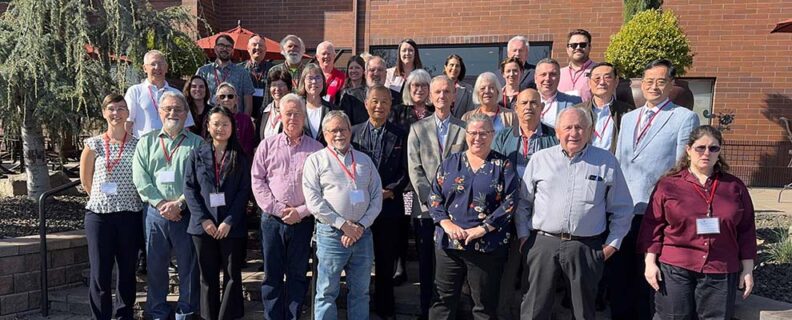
2025 Advisory Committee Meeting
Wednesday and Thursday, April 9-10
Quick Links |
 Agenda
The 2025 annual meeting of the USTUR’s Scientific Advisory Committee (SAC) was held April 9-10 in Richland, WA. This two-day meeting featured both operational and scientific presentations. It provided time for SAC members to discuss the USTUR’s activities during the past year, and to make recommendations for the coming year.
Meeting Summary
Day 1 (Wednesday)
The first day of the meeting described operational activities during the past year, and summarized research carried out using USTUR data and materials.
The meeting opened with introductions and updates. The USTUR director, Sergei Tolmachev, welcomed meeting attendees, and the committee chair, Thomas Rucker, provided opening remarks. This was followed by an update on the Department of Energy (DOE) given by DOE EHSS-13 director, Robin Elgart. WSU Tri-Cities vice chancellor, Robert Bauman, provided updates regarding the WSU Tri-Cities campus, and Michelle Nassif described the Cougar Tracks program, which offers a variety of training and learning opportunities for community members. WSU College of Pharmacy and Pharmaceutical Sciences (CPPS) associate dean, Mark Leid, summarized academic programs, enrollment, and research at the CPPS. Following these brief updates, the USTUR’s faculty and staff gave several presentations on the operational aspects of the Registries, including: administrative and financial developments, progress toward addressing recommendations from the 2024 SAC meeting, registrant statistics, and radiochemistry operations.
This year’s meeting included four scientific presentations on a variety of topics related to USTUR research. Kathryn Higley, president of the National Council on Radiation Protection and Measurements (NCRP), summarized the Million Person Study (MPS), which focuses on low-dose-rate health effects and is the largest ever occupational radiation epidemiology study. She emphasized ways that the USTUR has contributed to this program and its critical importance to the work it carries out. Caleigh Samuels of Oak Ridge National Laboratory briefly introduced the history and mission of the Center for Radiation Protection and Knowledge (CRPK) at Oak Ridge and described many ways that the USTUR contributes to their research. Isaac Arnquist described the mass spectrometry capabilities at Pacific Northwest National Laboratory (PNNL) and the feasibility of analyzing USTUR samples for radionuclides not routinely measured at the USTUR and/or activities below the detection limits available at the USTUR. The final scientific presentation was given by Stacey McComish, who summarized a paper that the USTUR is preparing, which describes how misclassification errors on death certificate causes of death have the potential to alter the findings of an epidemiological study.
To close the first day of the meeting, Dr. Tolmachev presented the USTUR’s research and operational plan for the coming year, and opened the meeting up for general discussion about the day’s presentations. This included a Q&A session, where SAC members and other attendees were invited to ask questions about the USTUR’s operations and research.
Day 2 (Thursday)
The second day was administrative in nature and was open only to SAC members, the USTUR staff, and DOE representatives. The day began with a brief discussion about SAC membership, and an opportunity for SAC members to ask further questions about the previous day’s presentations. This was followed by an executive session, where only SAC members remained in the meeting. After lunch, the USTUR staff and the DOE representatives rejoined the meeting, and the SAC shared several comments regarding progress during the past year as well as recommendations for the coming year.
SAC Membership
Thomas Rucker’s third term on the advisory committee has expired, and he has been replaced by Kenneth Inn. Dr. Inn served on the committee in the 1990s and attended this year’s advisory committee meeting as an incoming member.